
15. June, 2026
Center for Regenerative Therapies Dresden (CRTD)
9:00 - 20:00
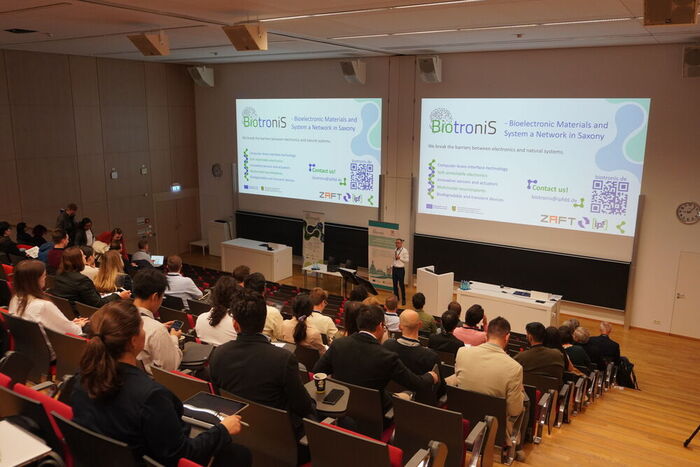
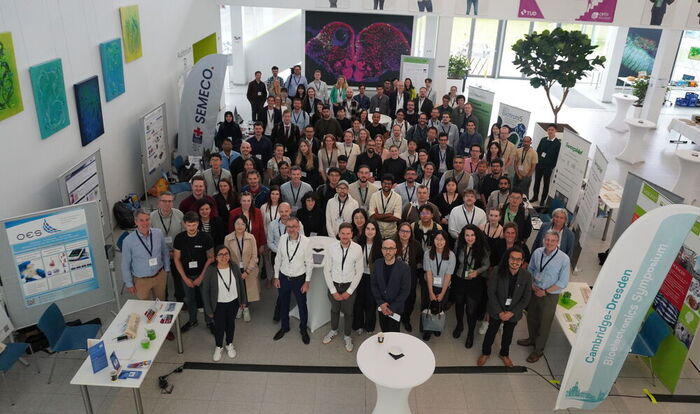
On 15–16 June 2026, around 130 researchers, innovators, and entrepreneurs gathered in Dresden for the Cambridge–Dresden Bioelectronics Symposium 2026.
Following two successful editions in Cambridge, the symposium continued its mission of fostering scientific exchange, international networking, and interdisciplinary collaboration in one of the most dynamic fields of modern research. Organized with the involvement of leading researchers from both Dresden such as Prof. Carsten Werner and Prof. Ivan Minev from Leibniz Institute of Polymer Research, Prof. Karl Leo from Dresden University of Technology, Prof. Kathrin Harre, Prof. Katrin Salchert from Hochschule für Technik und Wirtschaft Dresden and Prof. George Malliaras from Cambridge University, the event brought together experts from academia, research institutes, start-ups, and industry to discuss the latest advances in bioelectronics and their path toward real-world applications.
The scientific program featured keynote lectures from four internationally recognized leaders in the field: Professor John A. Rogers (Northwestern University), Professor Eleni Stavrinidou (Linköping University), Professor Sahika Inal (KAUST), and Dr. Nicolas Vachicouras (Neurosoft Bioelectronics). Their presentations highlighted emerging developments in neural interfaces, plant bioelectronics, biosensing technologies, and the translation of advanced bioelectronic systems into clinical practice.
Throughout the two-day program, invited speakers and contributing researchers presented their cutting-edge work on topics such as bioelectronic implants, regenerative biomaterials, biohybrid living interfaces, neuromorphic systems, organic mixed conductors, optoelectronic therapies, and next-generation sensing technologies. The variety of topics reflected the interdisciplinary nature of bioelectronics, which combines materials science, electronics, biology, medicine, and data-driven technologies to create new ways of interacting with living systems.
A recurring theme throughout the symposium was translation: how scientific discoveries can be transformed into technologies that improve healthcare and quality of life. Discussions explored both the opportunities and challenges of bringing bioelectronic innovations from the laboratory to practical applications, including implantable medical devices, advanced diagnostic tools, regenerative therapies, and intelligent sensing platforms.
Beyond the scientific sessions, the symposium featured poster presentations, technology demonstrations, start-up pitches, and dedicated networking activities. These interactions provided valuable opportunities for participants at all career stages to exchange ideas, establish new collaborations, and build connections across disciplines and sectors.
The event also showcased the unique strengths of Dresden as a growing center for bioelectronics and medical technology. With its strong ecosystem spanning semiconductor technologies, advanced materials research, biotechnology, and translational medicine, Dresden offers an ideal environment for accelerating innovation at the interface of technology and life sciences.
Networking and community building remain central objectives of the BiotroniS initiative, and the symposium provided an important platform for strengthening international partnerships. By bringing together established leaders and emerging researchers, the event created new opportunities for collaboration that extend far beyond the two days of scientific presentations.
The organizers would like to thank all speakers, participants, partners, sponsors, and volunteers who contributed to the success of the symposium. Special thanks are extended to Saxony Trade & Invest and Organic Electronics Saxony for their support.
As bioelectronics continues to evolve and expand, the Cambridge–Dresden Bioelectronics Symposium serves as an important forum for connecting people, ideas, and technologies. The collaborations and discussions initiated in Dresden are expected to contribute to future scientific advances, technology transfer activities, and international partnerships in the years to come.
© BiotroniS, Hohe Straße 6, 01069 Dresden
Source: https://en.biotronis.de/mitteilung/Cambridge%E2%80%93Dresden_Bioelectronics_Symposium_15_-_16_June_2026